

Concrete sealing that protects against deicer, oil and Colorado winters
A sealer is the cheapest insurance a slab can have. We clean first, choose the right type for the surface, and apply it in the right weather so it actually lasts.
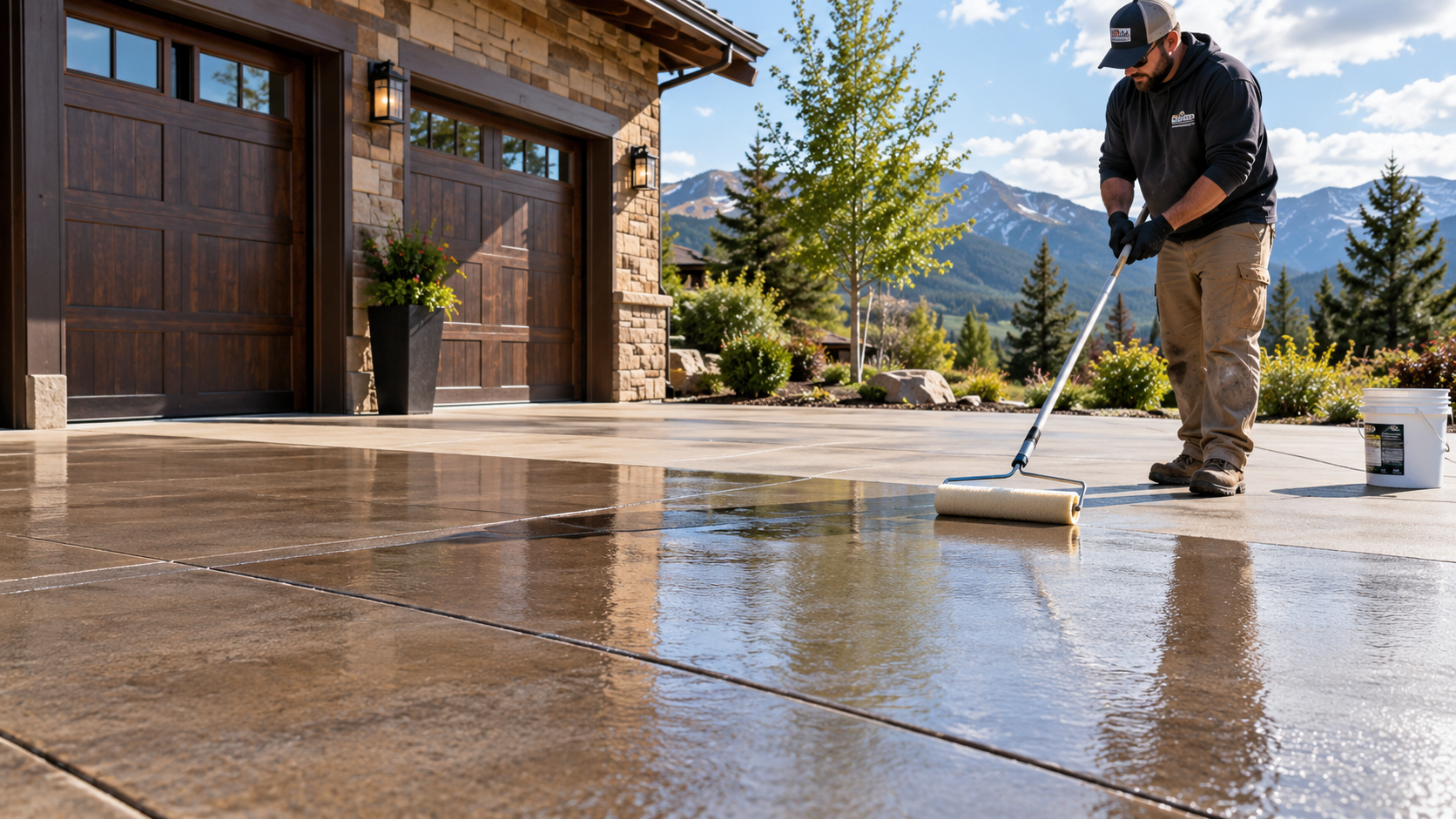 Sealer application on a driveway, Larimer County
Clean concrete is a result. Sealed concrete is a plan.
Bare concrete is a sponge. Water, deicer, oil and sprinkler iron all soak in, and the freeze and thaw cycle turns that moisture into pitting and scaling a little more every winter. A sealer closes the pores or forms a film on top, so the next spill sits on the surface long enough to wipe away and the next freeze has nothing to work on.
There are two families of sealer and they do different jobs. Penetrating sealers soak in, stay invisible and protect against water and salt, which is what most driveways and walks want. Film forming sealers sit on top, bring out color on stamped and decorative concrete, and give that wet look. Our Elite Crete Systems training covered sealers and protective coatings specifically, so we choose the right one rather than the one on the truck.
What sealing protects against
- Pitting, scaling and surface flaking from magnesium chloride deicer
- Freeze and thaw damage from water trapped in the pores
- Oil, grease and rust stains soaking into the slab
- UV fade on stamped, colored and stained concrete
- Efflorescence and white haze from water moving through the surface
- Dust and dirt bonding to the surface between cleanings
Sealers need a clean, dry surface and a dry, mild weather window to cure. We schedule around the forecast and will not seal concrete that is damp or about to be rained on.
What a concrete sealing includes
Done properly, in order, whether it is a driveway in Loveland or a stamped patio in Superior.
- Surface cleaning firstThe slab is surface cleaned and stains are treated so the sealer bonds to concrete, not grime.
- Right sealer for the jobPenetrating for driveways and walks, decorative film forming for stamped and colored concrete. We explain which and why.
- Old sealer assessedIf a failing sealer is already on the surface we tell you whether it needs stripping before a new coat will bond.
- Dry time and weather windowConcrete must be fully dry and the forecast clear. We schedule the application around both.
- Even applicationApplied with the right tool for the product so there are no puddles, streaks or missed strips.
- Cure time explainedYou get the exact foot traffic and vehicle cure times for the product used before we leave.
Why Front Range concrete needs a sealer more than most
Colorado concrete deals with a combination most places never see: magnesium chloride on every road all winter, dozens of freeze and thaw cycles a season, and some of the strongest UV in the country the rest of the year. Unsealed, a driveway starts showing surface damage within a few winters.
A penetrating sealer on a driveway and a UV resistant decorative sealer on a patio are the difference between concrete that looks new at ten years and concrete that needs resurfacing at five.
- Deicer defensePenetrating sealers keep magnesium chloride from soaking into the slab, which is where scaling starts.
- Freeze and thawSealed concrete holds less water, so there is less to freeze and expand in January.
- UV protectionDecorative sealers with UV blockers keep stamped and colored concrete from fading a shade a year.
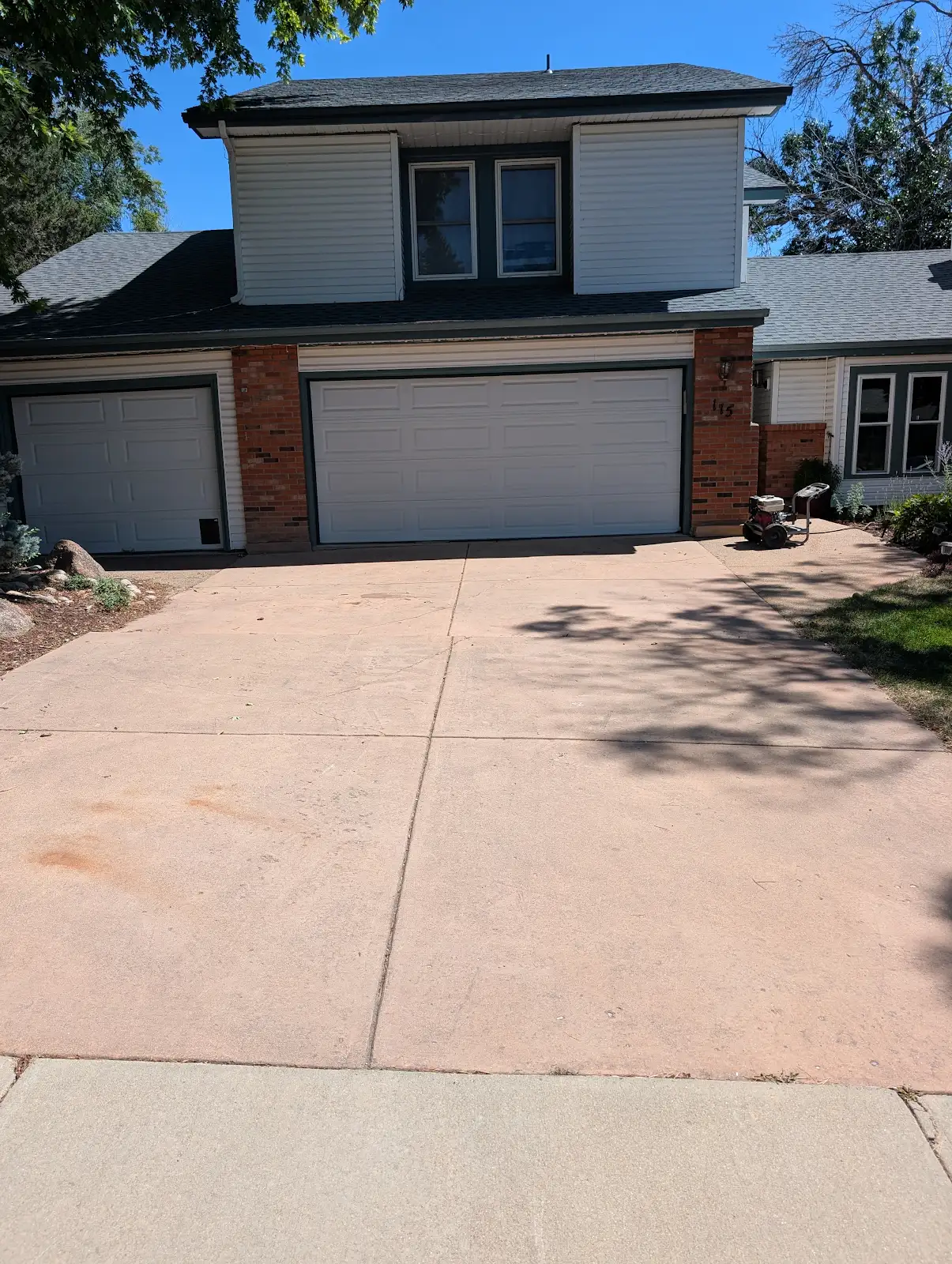
How a sealing job goes
Cleaning and sealing are usually two visits, with dry time in between.
Photo and quote
Text a photo of the concrete and tell us if it is stamped, colored or plain. We will recommend a sealer type and quote both cleaning and sealing.
Clean and treat
The surface is cleaned and stains are treated so the sealer goes onto bare, clean concrete.
Dry and seal
Once the slab is fully dry and the weather is right, the sealer is applied evenly.
Cure and maintain
You get the cure times, and we tell you when to expect the next coat, usually years out for penetrating sealers.
Concrete sealing questions
The things people ask before they book. If yours is not here, text us a photo and ask.
Penetrating sealers on a driveway typically last several years before a reapplication. Decorative film forming sealers on stamped or colored concrete usually need a fresh coat every couple of years, depending on sun and traffic. We tell you what to expect for the product we use.
Penetrating sealers do not change the texture at all. Film forming decorative sealers can be slick when wet, so we add a grip additive on patios, pool decks and steps.
Foot traffic is usually fine within hours and vehicles the next day or two, depending on the product and the weather. We give you the exact times before we leave.
Yes, once it has cured, which is generally about a month after the pour. Sealing a new driveway before its first winter is one of the best things you can do for it.
It is the best protection available short of never using deicer. A penetrating sealer keeps magnesium chloride from soaking in, which is what causes the pitting. It is not a guarantee against everything, but it is the difference between a driveway that lasts and one that scales.
Services that go with it
Sealing is almost always the second half of one of these.
Concrete sealing near you
Based in Berthoud and working across Boulder, Larimer and Jefferson counties.
Boulder County
Larimer County
Not on the list? We take on jobs just outside these counties too. Send us the address and we will tell you quickly. All service areas
Get a sealing quote by text, call or this form
A photo of the concrete gets you the fastest answer. Tell us if it is plain, stamped or colored and we will recommend the right sealer.
Request a free quote
We reply by text or email, usually the same day.
Residential and commercial. Serving Boulder, Jefferson and Larimer counties.